
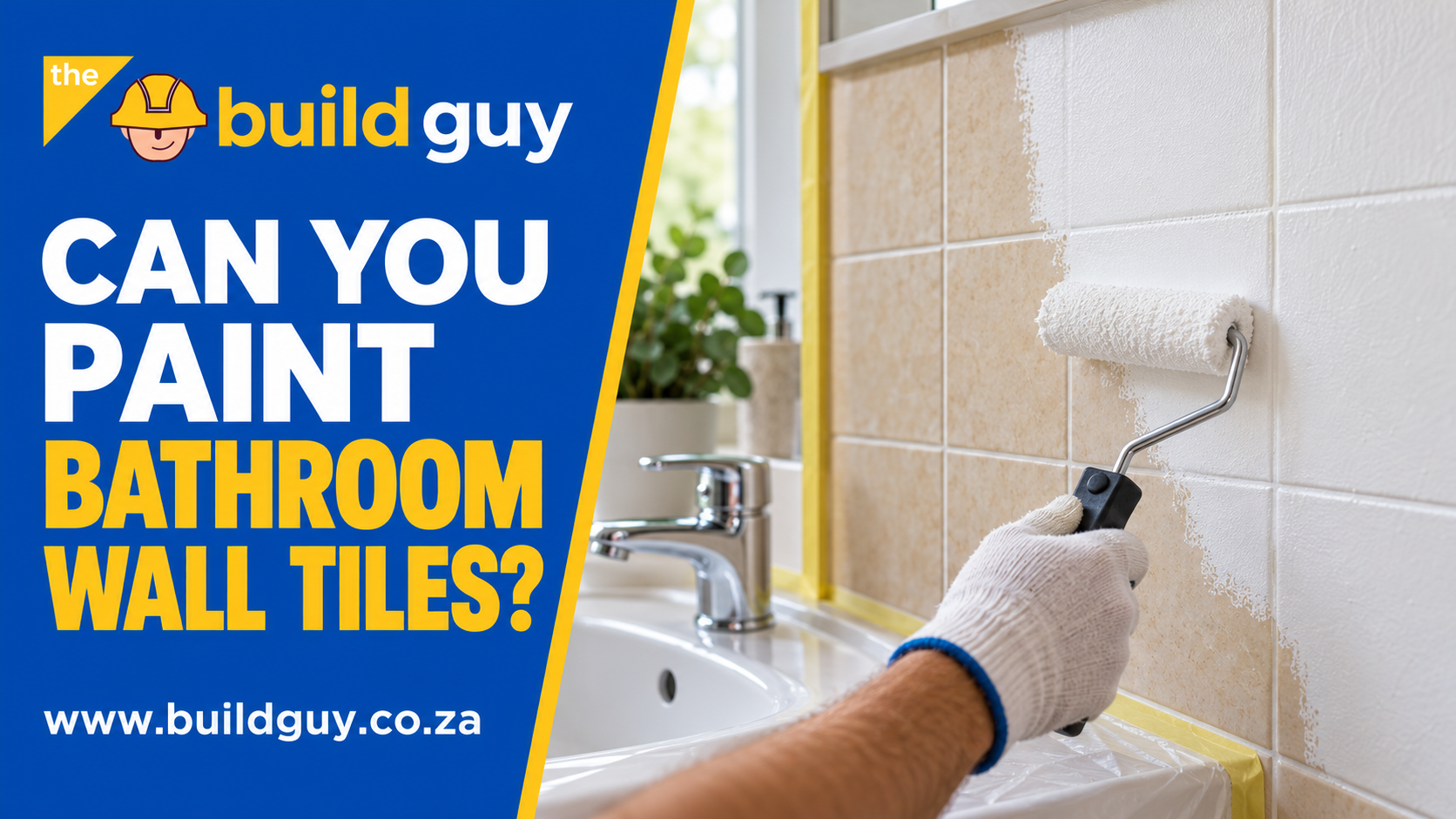
Yes, you can paint bathroom wall tiles. The more useful answer is this: you should only paint tiles when you understand that it is a cosmetic repair, not the same as retiling or waterproofing a bathroom properly.
For Gauteng property owners trying to improve an older bathroom without a full renovation, tile paint can be tempting. It avoids demolition, rubble, dust and the immediate cost of new tiles. But bathrooms are harsh spaces. Steam, cleaning chemicals, soap residue, silicone joints, loose grout and water splash zones all work against paint adhesion.
At The Build Guy, we are often asked whether painting bathroom tiles is a good idea. Our answer is cautious because we see what happens after the fresh finish has lived through daily showers.
Rudolph Badenhorst’s site experience: “Clients want to paint their bathroom wall tiles, my experiance the paint will start to crack and peal off with time.”
That does not mean tile paint never works. It means the decision should be made with realistic expectations, especially in Centurion, Pretoria East, Midrand, Sandton, Bryanston, Randburg, Roodepoort and other Gauteng homes where bathrooms often have limited ventilation or older grout and silicone.
The short answer: tile paint can work, but not everywhere
Tile paint is most suitable for low-impact wall areas: a guest toilet splashback, a decorative section above a basin, or older wall tiles that are dry, solid, clean and not inside the shower enclosure.
It is a poor choice where the tiles are continually wet. Dulux South Africa’s Bathroom+ technical data sheet states that the product is suitable for interiors with high condensation, but is not suitable for areas continually soaked with water, including shower enclosures. The same data sheet lists ceramic wall tiles as a possible substrate only where the correct preparation and priming are done, and it specifically excludes floor tiles in the ceramic wall tile preparation section. Dulux Bathroom+ technical data sheet
Plascon’s Tile and Melamine Primer technical information also positions the product as a primer for interior ceramic wall tiles and melamine, used to promote adhesion before enamel or emulsion topcoats. That is important: the primer is part of a paint system, not magic glue that can overcome dirty tiles, leaking joints or constant water exposure. Plascon Tile & Melamine Primer technical data sheet
Why painted bathroom tiles crack and peel
When painted tiles fail, the owner often blames the paint. In practice, failure usually comes from a combination of the surface, the bathroom conditions and the preparation.
1. Glazed tiles are difficult for paint to grip
Most bathroom wall tiles have a hard glazed surface. That glaze is designed to resist water and dirt. Unfortunately, the same surface also resists paint adhesion. If the tiles are not thoroughly degreased, rinsed, dried, sanded where required and primed with the correct bonding primer, the topcoat can sit on the surface instead of bonding properly.
2. Soap, body oils and cleaners leave residue
A bathroom wall can look clean while still carrying soap scum, silicone polish, body oils or old cleaner residue. Around baths, showers and basins, these residues are common. Dulux’s tile preparation notes require degreasing around sinks and bath or shower areas, thorough rinsing and repair of loose grout before painting. Dulux Bathroom+ technical data sheet
3. Loose grout and cracked silicone move
Paint does not repair failed grout. If grout is loose, cracked or powdery, water can get behind the tile line and the paint film can fail from the edge. Silicone is another problem: paint generally does not bond well to silicone, and silicone joints move where a bath, basin, shower screen or wall junction flexes. Paint bridging those joints can crack.
4. Constant wetting is different from steam resistance
There is a big difference between a paint that resists bathroom humidity and a coating that can survive being soaked every day. A shower wall is exposed to direct water, soap, shampoo, cleaning chemicals and abrasion. Even if the wall looks good for a while, the weak points are usually corners, grout lines, tile edges and areas cleaned aggressively.
5. Poor ventilation keeps the surface damp
South African building regulations require bathrooms, shower rooms and rooms containing toilets to have lighting and ventilation suitable for safe and healthy use. SANS 10400-O deals with how the lighting and ventilation requirements of Part O of the National Building Regulations may be satisfied. SANS 10400-O: Lighting and ventilation
From a practical renovation point of view, a bathroom with a weak extractor, no window, a swollen ceiling, mouldy silicone or condensation running down the walls is not a good candidate for tile painting until the moisture problem is understood. The World Health Organization’s indoor air guidance also treats dampness and mould as problems that should be prevented and remediated, with moisture control and ventilation forming part of the solution. WHO guidelines for indoor air quality: dampness and mould
When painting bathroom tiles may be acceptable
Painting bathroom wall tiles may be acceptable when all of the following are true:
- The tiles are on a dry wall, not inside the shower enclosure.
- The tiles are firmly bonded and not drummy, loose or cracked.
- The grout is sound and can be cleaned properly.
- There is no active leak, rising damp, water behind the tiles or mould problem.
- The bathroom has decent ventilation, either natural or mechanical.
- The owner understands that the finish may need maintenance and may not last like new tiles.
For a rental unit, a guest bathroom or a short-term cosmetic refresh before a later renovation, painting can make sense. For a main family bathroom used every day, especially around a shower or bath, retiling is usually the more durable option.
If you are still comparing options, our article on budget-friendly bathroom renovation ideas may help you decide where to spend and where to save.
When you should not paint bathroom tiles
Do not paint bathroom tiles as a cover-up for building problems. Paint is the wrong solution if the wall is leaking, the waterproofing has failed, the grout is crumbling, the tiles are lifting, or there is mould that keeps returning after cleaning.
You should also be careful if the bathroom has no extractor fan, no opening window, or signs of heavy condensation. SANS 10400-O includes requirements for lighting and ventilation, and artificial ventilation systems may require local authority approval depending on the system and context. This is not a DIY design issue where you should guess; ventilation concerns should be assessed against the actual bathroom layout. SANS 10400-O: Lighting and ventilation
Also avoid painting floor tiles unless you are using a product system specifically designed for floors. This article is about bathroom wall tiles. Bathroom floors have foot traffic, standing water, bath mats, cleaning abrasion and slip-risk considerations. Wall-tile advice should not be copied onto floors.
The correct process if you decide to paint tiles
If you accept the risks and still want to paint bathroom wall tiles, the job should be treated as a surface preparation project first and a painting project second.
Step 1: Inspect the bathroom properly
Check whether the tiles are firmly attached. Tap for hollow sounds. Look for cracked grout, loose silicone, water staining, swollen skirting, damp plaster on the other side of the wall, mould on the ceiling and peeling paint nearby. If there is a moisture source, fix that before any coating is applied.
Step 2: Remove silicone where paint edges need to finish
Old silicone at bath edges, shower screens and corners is often contaminated. It should not simply be painted over. In many cases it must be removed, the area cleaned and dried, and new sanitary silicone applied after painting where appropriate.
Step 3: Degrease and rinse thoroughly
Use the degreaser or cleaner recommended by the paint system manufacturer. Do not leave soap or sugar soap residue behind. Rinse properly and allow the surface to dry. The manufacturer’s data sheet should decide the preparation method, drying time, temperature range, recoat time and primer choice.
Step 4: Repair grout and defects
Loose grout must be removed and repaired before priming. Chipped tiles, cracks and failed corners need attention. If a tile is cracked because the substrate is moving, paint will not solve that movement.
Step 5: Prime with a tile-compatible bonding primer
Use a primer designed for ceramic wall tiles, such as the type described in the Plascon Tile and Melamine Primer technical data sheet, or the primer specified by your chosen topcoat system. Do not mix products randomly unless the manufacturer confirms compatibility. Plascon Tile & Melamine Primer technical data sheet
Step 6: Apply the correct topcoat and allow curing time
Follow the data sheet for number of coats, recoat time and exposure time. Dulux Bathroom+ notes, for example, that drying times are extended in cold, wet or humid conditions, and that the paint should be allowed at least 24 hours to dry before exposure to condensation. Dulux Bathroom+ technical data sheet
Do not rush the bathroom back into use. A painted tile surface may feel dry before the coating system has developed enough strength for cleaning, steam and daily use.
Paint tiles or retile: the practical choice
Here is the honest trade-off. Painting tiles is less disruptive upfront, but it carries a higher risk of future peeling, chipping and maintenance. Retiling costs more and involves more mess, but it allows the contractor to inspect the substrate, repair damaged plaster, address waterproofing concerns and install a new finish that is designed for wet areas.
Professional opinion: in a busy main bathroom, especially where the tiles are in or near the shower, we would rather price the proper repair than sell a paint finish as if it is equal to new tiling. In a dry guest toilet or a temporary refresh, tile paint can be a reasonable compromise if the owner accepts the limits.
If your bathroom needs more than a cosmetic refresh, view our bathroom renovations page or use the bathroom renovation planner to organise the scope before requesting a quotation.
Common failure signs after painting tiles
Watch for small cracks along grout lines, bubbling near corners, peeling around silicone joints, soft paint close to the shower, and chips where bottles or cleaning tools knock the wall. These are early signs that moisture, movement or poor adhesion is winning.
Once peeling starts, patch repairs are often visible. You may need to sand, re-prime and repaint a larger section, and the new coating may still fail if the original cause remains. That is why the first inspection matters more than the colour choice.
Best next step for Gauteng homeowners
If you are in Centurion, Pretoria East, Midrand, Kyalami, Sandton, Bryanston, Randburg, Roodepoort, Montana, Wonderboom or the Moot, The Build Guy can assess the actual bathroom before you decide. We will look at tile condition, grout, silicone, ventilation, damp signs and whether painting, partial repair or retiling is the sensible option.
For a bathroom that only needs a cosmetic improvement, we can explain the risks clearly. For a bathroom with leaks, mould or failed grout, we will not pretend that paint is a permanent fix. Request a site-specific assessment or quotation through The Build Guy and make the decision with the wall in front of us, not from a product label alone.
Frequently asked questions
Can you paint bathroom wall tiles?
Yes, but it is best treated as a cosmetic refresh, not a permanent wet-area repair. It may work on dry, sound wall tiles with the correct cleaning, primer and topcoat, but it is risky in shower enclosures and constantly wet areas.
Why does bathroom tile paint peel?
Common causes include poor cleaning, soap residue, glossy tiles without proper primer, loose grout, movement at silicone joints, constant water exposure and poor ventilation.
Can I paint tiles inside a shower?
It is not recommended unless the coating system is specifically designed and warranted for that exposure. Dulux South Africa’s Bathroom+ data sheet says the product is not suitable for areas continually soaked with water, such as shower enclosures.
Is painting tiles cheaper than retiling?
Painting usually has lower upfront disruption, but it can cost more later if it cracks and peels. Retiling is more disruptive, but it allows damaged grout, substrate and waterproofing issues to be addressed properly.
Should I paint over mouldy bathroom tiles?
No. Mould and dampness must be cleaned and the moisture source addressed first. Painting over mould or recurring condensation usually leads to failure and does not solve the underlying problem.
Sources and further reading
- Dulux Bathroom+ Technical Data Sheet — Dulux Bathroom+ is suitable for high-condensation interiors with proper preparation and priming, lists ceramic wall tiles as a possible substrate, and states it is not suitable for areas continually soaked with water such as shower enclosures.
- Plascon Tile & Melamine Primer Technical Data Sheet — Plascon Tile & Melamine Primer is intended for interior ceramic wall tiles and melamine, promoting adhesion before suitable enamel or emulsion topcoats.
- SANS 10400-O: The Application of the National Building Regulations Part O: Lighting and Ventilation — Bathrooms, shower rooms and toilet rooms must have suitable lighting and ventilation, and compliance can be assessed under SANS 10400-O.
- National Building Regulations and Building Standards Act 103 of 1977 — Provides the legal framework for national building regulations and building standards in South Africa.
- WHO Guidelines for Indoor Air Quality: Dampness and Mould — WHO guidance identifies dampness and mould as indoor air quality concerns and supports prevention and remediation through moisture control, ventilation and building maintenance.